

Buy Natural Artisan Soap Online: 2026 Guide
Table of Contents
- Why Cold Process Soap Beats Commercial Bars
- How to Identify Natural Soap Ingredients Before You Buy
- Handcrafted Bars Worth Buying: Top Picks from Just Cleansed
- How to Store Handmade Soap So It Lasts Longer
- What Separates Real Artisan Soap from Greenwashed Labels
- Pricing, Value, and What You Get for $9 a Bar
- Frequently Asked Questions
Last Updated: September 11, 2026
Why Cold Process Soap Beats Commercial Bars
Cold process soap is made by mixing oils and lye without external heat, letting saponification happen slowly over weeks. That slow cure preserves the glycerin that commercial bars strip out and sell back to you as a separate lotion.
Most mass-market bars are made with tallow, synthetic detergents, and heat processing that destroys naturally occurring glycerin. The result: a bar that cleans hard and leaves your skin tight. Cold process keeps that glycerin in the bar, which is why a properly cured artisan soap feels moisturizing instead of stripping.
If you want to buy natural artisan soap online, this is the single most important distinction to understand before you spend a dollar. Just Cleansed builds its entire catalog around cold process, small-batch bars.
The FDA guidance on cosmetic labeling requires soap makers to list every ingredient, so you can verify these claims yourself.
How to Identify Natural Soap Ingredients Before You Buy
The fastest way to spot real natural soap is to read the first five ingredients. If "sodium tallowate," "sodium lauryl sulfate," or "fragrance" appear at the top, you're looking at a commercial bar wearing a natural costume.
Here's what to look for instead:
- Saponified oils (olive, coconut, shea butter, sunflower) listed first
- Glycerin retained, not removed
- Essential oils or named fragrance compounds, not the generic word "fragrance" alone
- No parabens, sulfates, or synthetic preservatives
- A cure date or batch number, which signals small-batch production
A common mistake is trusting the front label. "Natural" isn't a regulated term on soap packaging in the United States, so the back label is the only place the truth lives.
Why the Ingredient List Actually Matters: The Chemistry Behind the Bar
True soap is the result of saponification, a reaction between a fat or oil and lye (sodium hydroxide) that produces soap molecules and glycerin as a byproduct. In cold-process bars, that glycerin stays in the finished bar. In most commercial manufacturing, the glycerin is extracted and sold separately as a premium ingredient in lotions and creams.
That single difference explains most of what you feel on your skin. Glycerin is a humectant, it pulls water toward your skin instead of stripping it away. A bar that keeps its glycerin tends to leave skin soft; a bar that has had glycerin removed tends to leave skin tight. This is also why cold-process bars often sit at a slightly higher, gentler pH than mass-market detergent bars, which are built from synthetic surfactants rather than true soap.
How to Spot Greenwashing on a Soap Label
Greenwashing rarely looks like an obvious lie. It looks like a leaf icon, the word "pure," and a fragrance listed as "natural perfume." Here are the specific tells to watch for:
- "Fragrance" or "parfum" with no source named. Under U.S. labeling rules, fragrance is a catch-all category that can legally conceal dozens of individual compounds, including synthetic ones. If a brand markets itself as natural but won't name its scent source, treat that as a red flag.
- "Made with" claims. "Made with shea butter" can mean the bar contains a trace amount while the first ingredient is a synthetic detergent. Always check the order of ingredients, not the front-of-pack callout.
- Vague certifications. A logo that isn't tied to a recognized third-party standard (USDA Organic, Leaping Bunny, etc.) is decoration, not verification.
- "Chemical-free." Everything is a chemical, including water and essential oils. This phrase signals marketing, not science.
- Missing cure date or batch number. Small-batch makers track batches because they cure for weeks. Mass producers don't need to.
A Quick Label-Reading Walkthrough
Take any bar and run it through this sequence:
- Scan the first three ingredients. They should be recognizable oils or butters, not sodium tallowate or sulfates.
- Look for glycerin. If it's listed, the maker either retained it or added it back, both are good signs. If it's absent from a bar marketed as moisturizing, ask why.
- Check the scent source. Named essential oils (lavender, peppermint, rosemary) or clearly identified fragrance compounds beat the word "fragrance" alone.
- Find the cure date or batch code. This is the single strongest signal of small-batch production.
- Cross-check the front claim against the back label. If the front says "natural" and the back lists synthetic preservatives, the back wins.
The FDA guidance on cosmetic labeling requires soap makers to list every ingredient, so you can verify these claims yourself.
Handcrafted Bars Worth Buying: Top Picks from Just Cleansed
Just Cleansed offers a curated selection of handcrafted, cold-process soaps at $9 each. Here's how to match a bar to your skin instead of guessing.
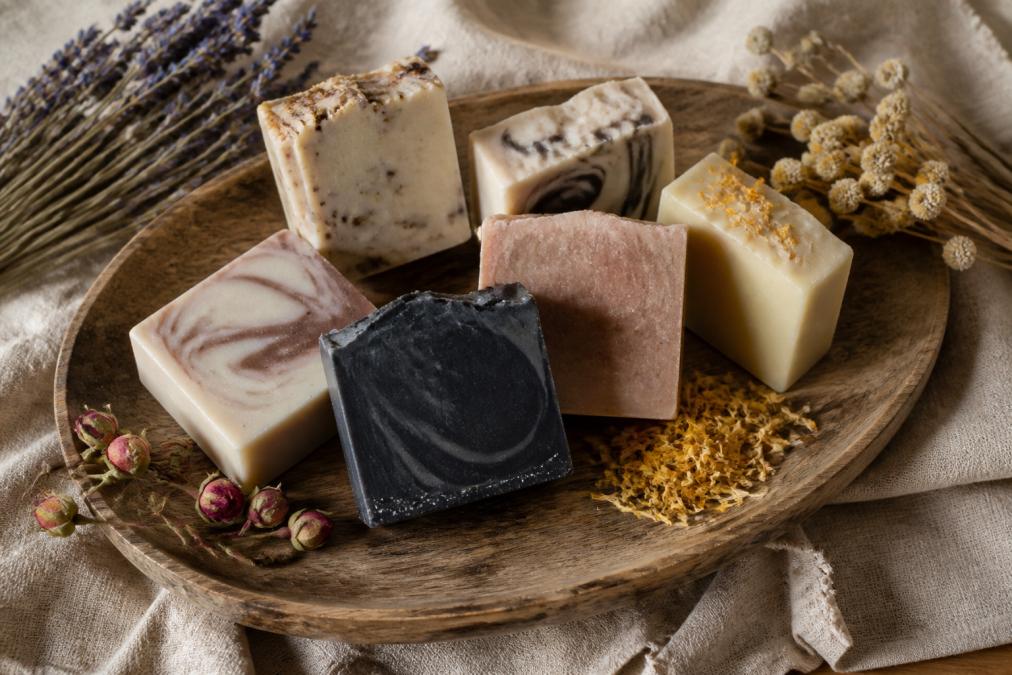
Honey From The Rock: Silk-Infused Comfort for Dry Skin
Honey From The Rock uses a traditional high-lard recipe with local honey and real silk for a creamy, stable lather. It's formulated with a deeply moisturizing blend of shea butter, coconut oil, and other nourishing oils. This bar is designed to leave a velvety, deeply nourished finish.
Strawberry Gelato: Gentle Exfoliation with Goat's Milk
Strawberry Gelato combines real strawberry puree for gentle exfoliation with goat's milk and heavy cream for an ultra-creamy lather. This beautifully textured bar brings a luxurious, dessert-like experience to your daily shower with a skin-loving blend of premium ingredients. Real Strawberry Puree provides a gentle, completely natural exfoliation.
Black Sheep: Activated Charcoal for Deep Cleansing
Black Sheep pairs activated charcoal with a Graphite-inspired scent. Activated charcoal draws out impurities and gives this bar its striking black and white marble swirl. A luxurious lather that cleanses deeply while leaving skin feeling smooth and refreshed.
Mint Condition: Rosemary and Peppermint for Morning Energy
Mint Condition blends rosemary and peppermint. This bar blends the earthy, herbal grounding of fresh rosemary with a sharp, cooling burst of peppermint. It leaves a clean, tingling sensation that makes your morning shower feel like a high-end spa retreat. Perfect for a clarifying, truly refreshing wash that leaves you feeling revitalized and in mint condition.
Barrel of Bourbon and The Executive: Warm, Masculine Scents
Barrel of Bourbon carries oak, vanilla, and smoky warmth inspired by a bourbon barrel, while The Executive delivers a classic lavender-citrus-leather profile. Both use a skin-loving base of shea butter and coconut oil. These are ideal for those who appreciate sophisticated scents.
Shop our handcrafted, natural soaps and bath products today →
| Bar | Key Ingredient | Best For | Price |
|---|---|---|---|
| Honey From The Rock | Local honey, silk | Dry, reactive skin | $9.00 |
| Strawberry Gelato | Strawberry puree, goat's milk | Gentle exfoliation | $9.00 |
| Black Sheep | Activated charcoal | Oily, combination skin | $9.00 |
| Mint Condition | Rosemary, peppermint | Morning refresh | $9.00 |
| Barrel of Bourbon | Bourbonwood scent | Warm, masculine profile | $9.00 |
| The Executive | Designer-inspired dupe | Classic confidence | $9.00 |
How to Store Handmade Soap So It Lasts Longer
Handmade soap lasts longest when it stays dry between uses. A wet bar dissolves faster than a dry one, so where you keep it matters more than how you buy it.
Three storage rules that actually extend bar life:
- Use a draining soap dish. Water pooling under the bar is the number one killer.
- Keep a spare bar in a cool, dark, dry spot until you're ready to use it. Cured soap keeps for a year or more when stored properly.
- Cut large bars in half. Using half at a time keeps the other half dry and doubles how long the bar lasts.
Why Handmade Soap Behaves Differently in Storage
Cold-process bars are more sensitive to moisture than commercial detergent bars, and the reason comes back to glycerin. Glycerin is a humectant, it attracts and holds water from the air. That's exactly what makes it good for your skin, but it also means a handmade bar left in a humid bathroom will absorb moisture, soften, and dissolve faster than a synthetic bar would.

There's a second factor: cure time. A well-cured bar has lost most of its excess water already, which makes it harder and longer-lasting. A bar that hasn't finished curing will feel soft and disappear quickly no matter how you store it. This is one more reason to buy from makers who publish cure dates, you're not just buying soap, you're buying soap that's ready to perform.
Storage Conditions That Actually Matter
- Humidity is the real enemy, not water alone. A bathroom that stays steamy after showers will shorten any bar's life. If your bathroom has no fan or window, consider storing the in-use bar on a dish outside the shower and moving it in only when you wash.
- Airflow beats enclosure. A covered soap dish traps moisture against the bar. An open, slatted, or raised dish lets the bar dry between uses.
- Cool and dark for backups. Heat and light accelerate the breakdown of essential oils, which is what gives many artisan bars their scent. A linen closet or cabinet beats a sunny windowsill.
- Keep bars away from each other. Stacked bars trap moisture between them. Give each backup bar its own space.
How Long Does a Bar Really Last?
A 5-6 ounce cold-process bar used daily by one person typically lasts four to six weeks with proper drainage. Cut in half and rotated, the same bar can stretch closer to eight weeks. Unused, properly stored bars hold their quality for about a year, some makers say longer, though scent intensity tends to fade gradually after that.
If a bar starts to feel slimy or develops a sticky surface, that's glycerin pulling moisture from the air, not spoilage. Move it to a drier spot and let it air out; it will firm back up.
The CDC guidance on handwashing reinforces that a clean, dry bar is just as hygienic as liquid soap, so you don't need to worry about bacteria on a well-drained bar.
What Separates Real Artisan Soap from Greenwashed Labels
Real artisan soap is made in small batches by a named maker, with a cure date and a full ingredient list. Greenwashed soap is mass-produced, stamped with leaves and the word "pure," and hides its real formula behind vague marketing.
The difference shows up in three places:
- Batch transparency. Real makers show batch numbers and cure dates. Greenwashers show neither.
- Ingredient honesty. Real makers name every oil. Greenwashers hide synthetics behind "fragrance."
- Price logic. Real artisan bars cost more because small batches cost more to make. A suspiciously cheap "artisan" bar is usually neither.
Pricing, Value, and What You Get for $9 a Bar
At $9 a bar, Just Cleansed sits above drugstore pricing but below most boutique skincare. Here's what that premium actually buys.
A 5-6 ounce bar lasts most people four to six weeks with proper storage, which works out to roughly the same daily cost as a mid-range body wash. What you're paying extra for is the glycerin that commercial bars remove, the shea butter and silk that stay in the formula, and the small-batch cure that takes weeks instead of hours.
The FTC guidance on environmental marketing claims sets the standards for what "natural," "biodegradable," and "eco-friendly" can legally mean on a label. That's the framework real artisan makers are held to, and it's why a $9 bar with a full ingredient list is worth more than a $3 bar with three words on the front.
The hardest part of buying natural soap online isn't finding options. It's telling a real cold-process bar apart from a commercial bar in artisan clothing, and that comes down to reading ingredients, checking batch transparency, and knowing what your skin actually needs. Just Cleansed offers a curated selection of handcrafted, small-batch bars at $9 each, every one built on a cold-process base of premium, natural ingredients with a full ingredient list on the label. Shop the Just Cleansed collection and find the bar that matches your skin, not the marketing on the front.
Frequently Asked Questions
What are the benefits of using cold-process artisan soap?
Cold-process soap retains naturally occurring glycerin, a humectant that draws moisture to your skin. Commercial bars often remove glycerin to sell it separately, leaving skin tight and dry. Cold-process bars also use gentler saponification, producing a soap that cleanses without stripping your skin barrier. Just Cleansed bars like Honey From The Rock and Strawberry Gelato offer a premium, handcrafted experience for daily moisturizing.
How can you tell if a soap is truly natural?
Read the ingredient list, not the front label. Look for recognizable oils and butters like coconut oil, olive oil, shea butter, and castor oil. Avoid synthetic detergents such as sodium lauryl sulfate, parabens, and artificial dyes. A transparent brand lists every ingredient, including sodium hydroxide, which is necessary for saponification and does not remain in the final bar. Just Cleansed publishes full ingredient lists for every product.
How should you store handmade soap to make it last longer?
Keep bars dry between uses. Place them on a draining soap dish that allows air to circulate underneath. Store unused bars in a cool, dark place wrapped in breathable paper, not plastic, so they can continue curing. A 5-6 ounce bar used daily typically lasts four to six weeks when kept dry. Rotating two bars gives each one time to dry fully, extending the life of both.
Is artisan soap better for sensitive skin?
Artisan soap made with gentle ingredients like shea butter, goat's milk, and colloidal oats can be a good choice for sensitive skin. Just Cleansed uses skin-nourishing bases and focuses on ingredient purity. If you have reactive skin, start with an unscented or lightly scented bar and patch-test on your inner arm before full use.
What is the difference between commercial soap and artisan soap?
Commercial soap manufacturers often strip glycerin and add synthetic lather boosters, preservatives, and artificial fragrances. Artisan soap makers like Just Cleansed use the cold-process method in small batches, keeping glycerin intact and choosing ingredients like shea butter, coconut oil, and real honey. The result is a bar that cleanses gently, nourishes the body and soul, and lists every ingredient transparently, so you know exactly what touches your skin.