

Best Natural Soap for Sensitive Skin: 2026 Guide
Table of Contents
- How We Chose the Best Natural Soaps for Sensitive Skin
- Why Natural Soap Is Better for Sensitive Skin
- Natural Soap Ingredients to Avoid for Sensitive Skin
- Cold Process Soap Benefits for Your Skin Barrier
- Quick Comparison of Top Sensitive Skin Soap Choices
- How to Transition to Natural Soap Without Irritation
- Patch Testing Protocols Before You Commit
- Conclusion: Choosing Your Gentle Match
- Frequently Asked Questions
Last Updated: September 9, 2026
Finding the best natural soap for sensitive skin often feels like navigating a minefield of marketing claims. Many soaps labeled "natural" still contain botanical extracts or essential oils that can trigger redness, itching, and contact dermatitis. This guide from Just Cleansed focuses on the chemistry of the bar rather than the aesthetic of the label.
The core problem isn't just about what's "natural" versus "synthetic." It's about how a soap interacts with your skin barrier. Harsh cleansing strips the lipid barrier, leaving skin tight and vulnerable. The best natural soap for sensitive skin preserves that barrier while still cleansing effectively.
How We Chose the Best Natural Soaps for Sensitive Skin
We evaluated options based on four non-negotiable criteria: ingredient transparency, absence of known irritants, the manufacturing process, and the pH profile of the final product. A soap that scores high on "natural" but fails on pH balance is still a poor choice for sensitive skin.
Our selection process prioritizes bars that use saponified oils rather than synthetic detergents. We also favor brands that disclose full ingredient lists without hiding behind proprietary "fragrance" blends. For this guide, we considered handcrafted cold-process bars, which retain natural glycerin, as well as commercial options that meet strict hypoallergenic standards.
The dermatological consensus is clear: a compromised skin barrier needs gentle, non-stripping cleansers. According to guidance from the American Academy of Dermatology on sensitive skin care, the best approach is to use fragrance-free products and avoid harsh scrubbing. This aligns with our focus on plant-based, moisturizing formulas that support the lipid barrier rather than dismantle it.
Why Natural Soap Is Better for Sensitive Skin
The common narrative is that natural soap is 'better' because it lacks synthetic detergents. While true, this misses the deeper mechanism that determines whether a cleanser will help or harm reactive skin: the pH of the final product and its interaction with your skin's acid mantle.
Your skin's surface is naturally acidic, typically hovering between a pH of 4.5 and 5.5, maintained by the acid mantle, a thin film of sebum, lactic acid, and amino acids that defends against bacteria and regulates enzyme activity (peer-reviewed research). When you wash with a cleanser that is too alkaline, you temporarily disrupt this mantle, raising the skin's pH for hours and leaving it vulnerable to irritation and moisture loss.
Here is where the distinction between 'natural soap' and 'syndet bars' becomes critical. True soap, whether natural or not, is the product of saponification, the chemical reaction between a fat and an alkali (lye). This process inherently produces a bar with a pH between 9 and 10 (PubMed). Even the gentlest, most artisanal cold-process bar will be alkaline. In contrast, synthetic detergent bars, or syndets, are formulated with surfactants and can be pH-balanced to match skin's natural acidity, typically around 5.5.
This reality creates a paradox: a true natural soap, by its chemical nature, is more alkaline than a well-formulated syndet bar. So why do many dermatologists still recommend natural soap for certain sensitive skin types? The answer lies in the type of cleansing action and the residue left behind.
Syndet bars often rely on harsh anionic surfactants like sodium lauryl sulfate (SLS) to create a high, foamy lather, which can strip the skin of its natural sebum aggressively. The alkaline pH of natural soap, while a temporary disruption, is often paired with a high fat content from saponified oils, leaving behind a thin, emollient layer of unsaponified fats and natural glycerin that buffers the skin against the alkaline shock and provides immediate post-wash hydration.
For a truly compromised barrier, the ideal is a syndet bar with a pH of 5.5 and no harsh surfactants. However, many commercial syndet bars are packed with synthetic fragrances, preservatives, and detergents that are more irritating than the alkalinity of a well-formulated natural soap. The choice is not simply 'natural vs. synthetic' but rather 'gentle vs. harsh' across both categories.
Consider the 'tightness test': after washing, if your skin feels tight, squeaky-clean, or dry, the cleanser, natural or not, has likely disrupted your barrier too much. A well-formulated natural soap, rich in superfatting oils, should leave your skin feeling clean but supple, not stripped.
Natural Soap Ingredients to Avoid for Sensitive Skin
When shopping for the best natural soap for sensitive skin, reading the ingredient list is non-negotiable. Just because a product is plant-derived doesn't mean it's safe for reactive skin. Some of the most problematic ingredients are actually the ones brands tout as "pure" or "botanical."
Synthetic Fragrances and Essential Oils
Fragrance is one of the leading causes of allergic contact dermatitis. While synthetic parfum is a known offender, essential oils are not automatically safe. Oils like lavender, citrus, and peppermint are common sensitizers, especially for those with compromised skin barriers.
A truly sensitive-skin formula should be fragrance-free, not just "unscented," which can still contain masking fragrances. Look for labels that explicitly state "fragrance-free" and "no essential oils" if you have a history of reactions.
Sulfates and Harsh Surfactants
Sodium lauryl sulfate (SLS) and sodium laureth sulfate (SLES) are detergents used to create lather. They are effective at removing oil, but they are also notorious for stripping the skin and causing irritation. For sensitive skin, these synthetic surfactants can worsen conditions like eczema.
Instead, look for bars that use saponified oils (the result of mixing lye with fats) or gentle, plant-based surfactants like coco-glucoside. A soap that lists "sodium cocoate" or "sodium olivate" indicates a true soap base rather than a detergent bar.
Cold Process Soap Benefits for Your Skin Barrier
Cold-process soap making is an artisanal method that preserves the natural glycerin produced during saponification. Unlike commercial processes that extract glycerin for other products, cold-process bars leave it in, offering a built-in moisturizer with every wash.
Shop our handcrafted, natural soaps and bath products today →
This method also allows for nutrient-dense additives like colloidal oatmeal, raw honey, and unrefined shea butter, which can soothe inflammation and support the skin's natural repair processes. For individuals with dermal sensitivity, the difference between a cold-process bar and a mass-produced detergent bar is often the difference between calm skin and angry patches.
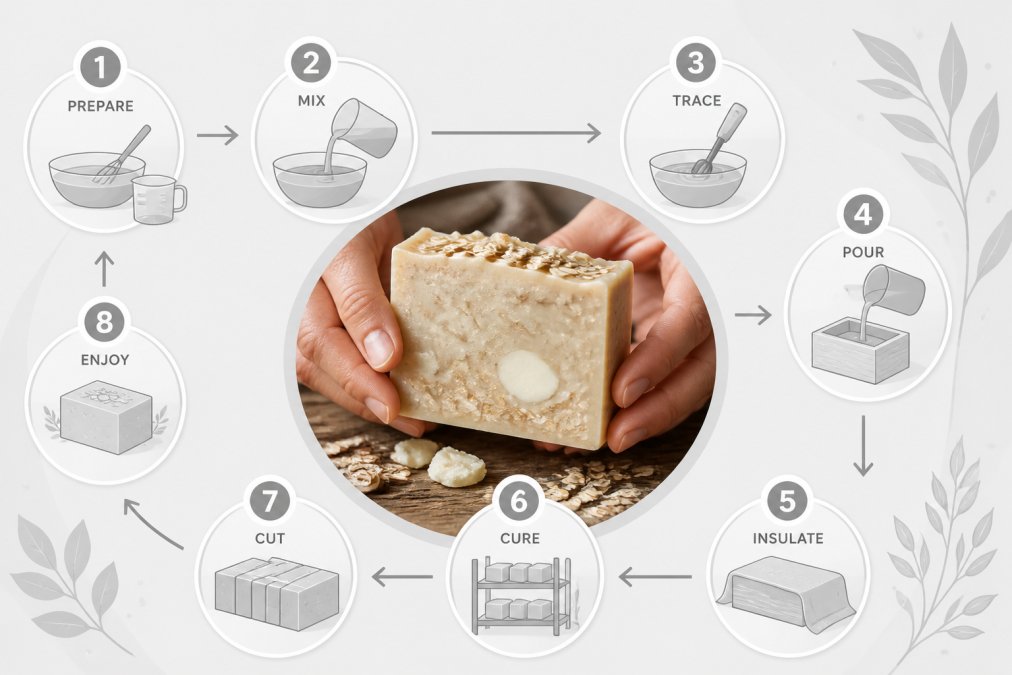
At Just Cleansed, we craft our soaps using this traditional cold-process method. Our small-batch approach ensures that each bar retains its natural glycerin and nourishing properties, providing a safe, non-toxic cleansing experience that deeply moisturizes without stripping the skin.
Quick Comparison of Top Sensitive Skin Soap Choices
To help you navigate the market, we've compared several leading options based on their formulation, price point, and suitability for reactive skin.
| Product | Key Feature | Price Point | Best For |
|---|---|---|---|
| Just Cleansed | Handcrafted, cold-process, transparent ingredients | Premium | Those seeking small-batch, pure formulations |
| Goat Milk Stuff Purity Soap | Fragrance-free, hypoallergenic | Affordable | Complete fragrance-free requirements |
| Dr. Bronner's Pure-Castile Bar | Organic, vegan, unscented | Budget-friendly | Eco-conscious users needing versatility |
| Kirk's Original Coco Castile | Coconut oil base, fragrance-free | Very affordable | Minimalist, budget-conscious shoppers |
| Shea Moisture Bar Soap | Shea butter, olive oil | Budget-friendly | Hydrating dry, sensitive skin |
Our top pick is Just Cleansed because of its uncompromising commitment to ingredient purity and the cold-process method. While other bars like Goat Milk Stuff offer excellent fragrance-free options, Just Cleansed provides a curated experience focused on simplicity and transparency, ensuring you know exactly what touches your skin.
How to Transition to Natural Soap Without Irritation
Switching from a conventional detergent bar to a natural soap can be a shock to the system, but the most common reason for failure isn't the soap itself, it's the water you're washing with. Hard water, containing high concentrations of dissolved calcium and magnesium, reacts with the fatty acids in natural soap to form an insoluble precipitate: soap scum. This scum leaves a film on your skin that can trap bacteria, cause dryness, and trigger the exact irritation you were trying to avoid.
If you live in a region with hard water, often indicated by white mineral deposits on faucets or difficulty getting a rich lather, your transition will require a different strategy. The scum is not a sign that the soap is 'bad'; it's a chemical reaction. To mitigate this, you have a few options:
- Use a chelating agent in your shower routine. A chelating agent binds to the minerals in hard water, preventing them from reacting with the soap. The most common is EDTA, but a more natural alternative is sodium phytate, derived from plant sources. Look for a final acidified rinse or a post-shower spray that contains one of these. A simple solution is to keep a spray bottle filled with a 1:1 mixture of distilled water and raw apple cider vinegar. After you've rinsed off the soap, spray this on your skin, let it sit for 30 seconds, and then rinse. The mild acidity of the vinegar helps dissolve the soap scum and restores your skin's acid mantle to its natural pH.
- Install a shower-head water softener. These are inexpensive, replaceable filters that contain ion-exchange resins to remove calcium and magnesium. They won't soften water as effectively as a whole-house system, but they can make a noticeable difference in how your soap lathers and rinses.
- Adjust your cleansing technique. In hard water, use less soap and focus on the areas that need cleansing most (underarms, groin, feet). For the rest of your body, a simple water rinse may be sufficient. This reduces the total amount of fatty acids available to react with the minerals.
Beyond the water issue, the transition period itself can be misunderstood. You might experience a temporary phase where your skin feels different, perhaps oilier or more congested. This is often called the 'purging' phase, but it's not a true detox. It is more likely a sign that your skin's microbiome and sebum production are re-regulating after being stripped by harsh sulfates. This adjustment typically lasts one to two weeks.
To manage this period effectively, adopt a 'staggered introduction' protocol:
- Week 1: Use the natural soap only on your underarms and feet. Continue using your old cleanser for the rest of your body. This allows the most sensitive areas to acclimate slowly.
- Week 2: Use the natural soap on your entire body, but only every other day. On the off days, rinse with lukewarm water only.
- Week 3: Use the natural soap daily. If you notice any tightness or redness, do not push through. Instead, revert to the Week 2 schedule and incorporate a post-wash moisturizer with ceramides to help rebuild the barrier.
Finally, adjust your expectations about lather. Natural soap produces a soft, creamy lather, not the big, foamy bubbles from sulfate-based bars. The lack of high foam is a sign that you are using a gentle, non-stripping cleanser. If you find the lather insufficient, use a natural loofah or konjac sponge to help work it into a richer foam.
Patch Testing Protocols Before You Commit
Before using any new soap on your face or full body, a patch test is the only way to predict an allergic reaction safely, especially critical for those with a history of contact dermatitis.
- Wash and dry a small area of skin on your inner forearm.
- Apply a small amount of the lather to the area and leave it for 24 hours.
- Cover the area with a bandage to prevent rubbing off.
- Check the site at 24 and 48 hours for redness, itching, or a rash.
If no reaction occurs, the soap is likely safe for broader use. If you experience any burning, redness, or hives, wash the area immediately and discontinue use. This protocol is your first line of defense against a full-body flare-up, a simple step that many skip, yet the most reliable way to vet a new product.
Conclusion: Choosing Your Gentle Match
The search for the best natural soap for sensitive skin is a personal one, defined by your unique skin chemistry and tolerance levels. The right choice hinges on understanding ingredient lists, respecting the skin barrier, and honoring the manufacturing process. Prioritize fragrance-free, cold-process bars that retain natural glycerin, and always patch test before committing.
At Just Cleansed, we believe that cleansing should be a sanctuary, not a source of stress. Our handcrafted, cold-process soaps are made with premium, natural ingredients to nourish your body and soul, free from the harsh chemicals that trigger irritation.
Get started with Just Cleansed and elevate your daily routine with a soap that cares for your sensitive skin. Shop our handcrafted, natural soaps and bath products today.
Frequently Asked Questions
What is the healthiest natural soap for sensitive skin?
The healthiest options are fragrance-free, cold-process bars with a short ingredient list. Look for soaps based on olive oil, shea butter, or goat milk, as these provide moisture without stripping the skin. Avoid bars with synthetic surfactants, sulfates, or added fragrance. A simple formula with natural glycerin helps maintain the skin barrier, making it a safer choice for irritation-prone skin.
What ingredients should be avoided in soap for sensitive skin?
Steer clear of sodium lauryl sulfate (SLS), parabens, and synthetic fragrances, as these are common triggers for skin irritation. Even natural soaps can be problematic if they contain high levels of essential oils like citrus or peppermint, which can sting sensitive skin. Dyes and artificial preservatives are also best avoided. Always check the label for a minimal list of plant-based oils and butters.
Does natural soap help with eczema and dry skin?
Yes, a properly formulated natural soap can help manage eczema and dry skin. Cold-process soaps retain natural glycerin, a humectant that draws moisture into the skin. Ingredients like colloidal oatmeal and shea butter provide soothing and anti-inflammatory benefits. However, everyone's triggers are different. Patch test any new bar on your inner arm for a few days to ensure it doesn't aggravate your condition.
How long does a natural bar of soap last compared to regular soap?
A high-quality, hard cold-process bar can last longer with daily use if it is allowed to dry between washes. Using a draining soap dish extends its life significantly. While the upfront cost may be higher than some drugstore brands, the concentration of natural oils means a little goes a long way. For current pricing and to understand the value, please visit our website.